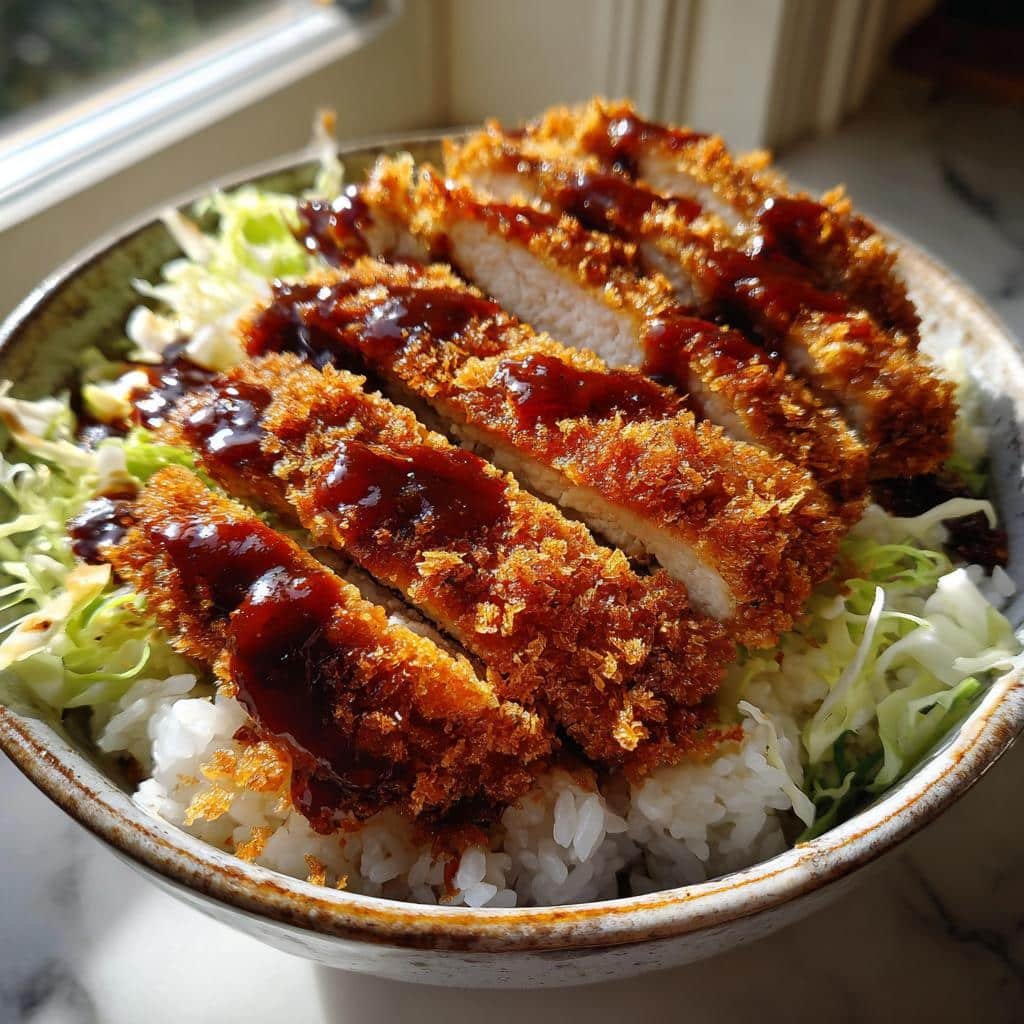
Oh my gosh, let me tell you about the first time I fell head over heels for Japanese katsu bowls with tonkatsu sauce! I was wandering through a tiny Tokyo alleyway after a long flight, starving and jet-lagged, when this incredible aroma hit me – crispy golden pork cutlets sizzling away. One bite of that crunchy, juicy katsu drizzled with that sweet-savory sauce over fluffy rice? Absolute magic. Now I make these bowls at least twice a month because they’re that good.
What makes Japanese katsu bowls with tonkatsu sauce so special is how simple perfection can be. That crackling panko crust giving way to tender pork, the tangy sauce cutting through the richness, the cool crunch of cabbage – it’s comfort food that feels fancy but comes together in under 30 minutes. My version keeps things authentic but easy enough for weeknights. Trust me, once you try homemade tonkatsu sauce, you’ll never go back to store-bought!
Why You'll Love These Japanese Katsu Bowls with Tonkatsu Sauce
Honestly, these Japanese katsu bowls with tonkatsu sauce check every box for me. Let me count the ways:
- That perfect crunch: The panko crust stays crispy even with the sauce – no soggy disasters here!
- Balanced flavors: Sweet, tangy tonkatsu sauce cuts through the rich pork like a dream.
- Crazy fast: Ready in 25 minutes flat – faster than takeout on a busy night.
- Endless customizing: Add a soft egg, swap in chicken, or pile on extra cabbage – it's your bowl!
Seriously, the first time my husband tried these, he said "Why do we ever eat anything else?" That's the magic of Japanese katsu bowls with tonkatsu sauce.
Ingredients for Japanese Katsu Bowls with Tonkatsu Sauce
Gathering the right ingredients is half the battle with Japanese katsu bowls – and I promise, everything here is worth tracking down! I’ve made this enough times to know these exact measurements create that perfect balance of crispy, juicy, and saucy goodness. Here’s what you’ll need:
- 2 pork loin chops (about 1/2 inch thick): Not too thin or they’ll dry out, not too thick or they won’t cook through. This golden thickness gives you that ideal juicy center with crispy edges.
- 1/2 cup all-purpose flour: Just regular flour works great – no fancy blends needed for that first crispy layer.
- 1 egg, beaten: My little trick? I add a splash of water to make it easier to coat the pork evenly.
- 1 cup panko breadcrumbs: Pack it lightly in the measuring cup – these Japanese-style crumbs make ALL the difference for that airy crunch.
- 1/2 tsp salt & 1/4 tsp black pepper: Simple seasoning lets the pork flavor shine through.
- 2 cups cooked short-grain rice: Sticky Japanese rice holds everything together beautifully.
- 1/4 cup tonkatsu sauce: The star of the show! You can buy it, but homemade is crazy easy (I’ll share my recipe soon).
- 2 cups shredded cabbage: I like mine super fine – it adds this refreshing crunch against the rich pork.
- 2 tbsp vegetable oil: Neutral flavor and high smoke point make it perfect for frying.
See? Nothing too crazy – just quality ingredients treated right. Now let’s turn these into something magical!
How to Make Japanese Katsu Bowls with Tonkatsu Sauce
Okay, let’s get cooking! Making Japanese katsu bowls with tonkatsu sauce is way easier than you’d think – I’ll walk you through each step so you get that perfect crispy-on-the-outside, juicy-on-the-inside magic every time.
Preparing the Pork Cutlets
First, let’s talk pork prep – this is where the crunch happens! Here’s exactly how I do it:
- Season smart: Pat those pork chops dry (wet meat = soggy crust!) then sprinkle both sides with salt and pepper. Don’t skip this – it seasons the meat all the way through.
- Flour power: Dredge each chop lightly in flour, shaking off excess. This creates a dry surface so the egg sticks perfectly.
- Egg wash: Dip into beaten egg, letting the excess drip off. Pro tip: Use one hand for dry ingredients, one for wet to avoid breadcrumb fingers!
- Panko perfection: Press firmly into panko crumbs, covering every inch. I literally pat it down like I’m tucking in a baby – this ensures maximum crunch.
Now for frying – heat oil in a pan over medium until shimmering (about 350°F if you have a thermometer). Carefully add the breaded chops – they should sizzle immediately! Fry 3-4 minutes per side until deep golden brown. Drain on paper towels, then let rest 2 minutes before slicing – this keeps all those juices inside where they belong.
Assembling the Bowls
This is where Japanese katsu bowls with tonkatsu sauce really come together – literally!
- Rice foundation: Divide warm rice between bowls, gently pressing it down slightly so it holds toppings nicely.
- Cabbage crunch: Pile on that shredded cabbage – I like a generous mound for freshness against the rich pork.
- Katsu crown: Fan out those gorgeous golden pork slices across the top. Show off that beautiful cross-section!
- Sauce finale: Drizzle tonkatsu sauce generously over everything – don’t be shy! The tangy-sweet flavor ties it all together.
And there you have it – restaurant-quality Japanese katsu bowls with tonkatsu sauce in your own kitchen! The first bite of that crispy pork with the cool cabbage and sticky rice? Pure happiness.
Tips for Perfect Japanese Katsu Bowls with Tonkatsu Sauce
After making these Japanese katsu bowls with tonkatsu sauce more times than I can count, I’ve picked up some game-changing tricks to take them from good to “oh-my-gosh-what-sorcery-is-this” amazing:
- Double-fry for insane crunch: After the first fry, let the cutlets rest 2 minutes, then fry again for 1 minute per side. This makes the crust stay crispy even under sauce – total game changer!
- Fresh panko is everything: Stale breadcrumbs won’t give you that signature airy texture. I always check the date on my panko – it should feel light and crisp when you rub it between your fingers.
- Slice pork right before serving: Wait to cut those beautiful golden cutlets until you’re ready to assemble. This keeps all the juices locked in where they belong.
- Keep components separate until the last minute: Store rice, cabbage, and katsu in different containers if prepping ahead. That way, nothing gets soggy before you’re ready to eat.
- Make extra sauce (trust me!): I always double the tonkatsu sauce because someone (usually me) will inevitably want to drown their bowl in more of that tangy goodness.
Follow these tips, and you’ll have Japanese katsu bowls with tonkatsu sauce that could rival any Tokyo eatery. My neighbors have actually knocked on my door when I’m cooking these because the smell is that incredible!
Ingredient Substitutions & Variations
Listen, I’m all about staying true to tradition with Japanese katsu bowls with tonkatsu sauce – but life happens! Here are my favorite swaps and upgrades that still keep that magical crispy-saucy balance:
Protein Play
No pork? No problem!
- Chicken katsu: Use boneless, skinless thighs (more forgiving than breasts) pounded to 1/2-inch thickness. Cook time stays the same!
- Vegetarian twist: Firm tofu pressed well and sliced thick works shockingly well. Extra tip: Freeze tofu first for meatier texture.
- Pork alternatives: Thin-cut turkey cutlets or even beef sirloin (cut thin) can sub in a pinch.
Crunch Factor
Panko not available? Let’s get creative:
- Gluten-free: Crushed rice crackers or gluten-free panko work beautifully. Just avoid cornflake crumbs – too sweet!
- Extra crispy: Mix panko with crushed potato chips (plain flavor) for insane crunch. (My guilty pleasure!)
Bowl Boosters
Take your Japanese katsu bowls with tonkatsu sauce next-level:
- Eggcellent addition: Top with a soft-boiled egg (6 minutes for jammy perfection). That runny yolk? Chef’s kiss!
- Pickled punch: Quick-pickled ginger or radish adds bright contrast. I always keep some in my fridge.
- Veggie love: Swap cabbage for shredded kale or add sautéed mushrooms. My kids love corn kernels mixed into the rice.
- Spice it up: Stir a dab of wasabi into the tonkatsu sauce or sprinkle with shichimi togarashi.
The beauty of Japanese katsu bowls with tonkatsu sauce is how adaptable they are. My rule? Keep that crispy-saucy-rice trifecta, and you can’t go wrong. Last week I made it with leftover Thanksgiving turkey and cranberry-tonkatsu sauce – weirdly amazing!
Serving Suggestions
Now that you’ve made these glorious Japanese katsu bowls with tonkatsu sauce, let’s talk about how to serve them like a pro! I always think of this dish as the main star that loves a good supporting cast. Here are my favorite ways to round out the meal:
Must-Have Sides
You can’t go wrong with these classic pairings:
- Miso soup: A small bowl of steaming miso with wakame and tofu is my go-to. The salty umami balances the rich katsu perfectly.
- Cucumber salad: Thinly sliced cukes with rice vinegar and sesame seeds add that refreshing crunch between bites. A creamy side like coleslaw also works well if you prefer something richer.
- Extra tonkatsu sauce: I always put out a little dish of sauce for dipping – because let’s be real, you can never have enough!
Meal Upgrade Ideas
Want to turn this into a feast? Try these:
- Japanese pickles: A small plate of takuan (yellow daikon) or umeboshi adds tangy contrast.
- Edamame: Steamed and salted – perfect for nibbling while you wait for the katsu to fry.
- Green tea: A crisp sencha cuts through the richness beautifully. Iced works great too!
Presentation tip: Use wide, shallow bowls so you can see all those gorgeous layers. And don’t forget the chopsticks! Even if you’re like me and occasionally resort to a fork when no one’s looking…
Storage & Reheating
Okay, real talk – Japanese katsu bowls with tonkatsu sauce are always best fresh, but I’ve totally been there with leftovers (because sometimes life happens!). Here’s how I keep things as crispy and delicious as possible when storing:
Smart Storage Tips
The golden rule? Keep everything separate! I learned this the hard way when I once stored assembled bowls overnight – hello, soggy disaster. Now I do this:
- Katsu cutlets: Let them cool completely, then store in an airtight container with paper towels underneath and on top to absorb moisture.
- Rice: Tightly covered while still slightly warm (this prevents drying out). Bonus tip: Add a damp paper towel on top before sealing!
- Cabbage: In its own container with a dry paper towel to absorb any condensation.
- Sauce: Separate little container – nobody likes pre-sauced soggy leftovers.
Reheating Like a Pro
Listen, the microwave is NOT your friend here – unless you want rubbery pork and sad, limp breading. Here’s how I bring back that magic:
- Oven is king: 350°F for 8-10 minutes on a wire rack (so air circulates underneath). Spritz lightly with oil first for extra crispiness.
- Air fryer rescue: 375°F for 4-5 minutes works amazingly if you have one. That circulating air is perfect for reviving crunch!
- Rice refresh: Sprinkle with a few drops of water before microwaving in 30-second bursts. Fluff with a fork between zaps.
Important note: Even with perfect reheating, these Japanese katsu bowls with tonkatsu sauce taste best within 2 days. The panko crust loses its magic after that, and nobody deserves mediocre katsu! When in doubt? Just make fresh – it’s fast enough that it’s worth it. For more quick dinner ideas, check out my recipe index!
Nutritional Information
Now, I’m no dietitian, but I know some of you like to keep track – so here’s the scoop on what’s in these Japanese katsu bowls with tonkatsu sauce! Remember, these are estimates (my grandma never measured a darn thing, and her food was magic). But for those who want numbers:
- Calories: About 720 per generous bowl – totally worth every bite!
- Fat: 28g (6g saturated) – that’s the crispy pork and oil doing their thing.
- Carbs: 82g – mostly from that delicious sticky rice and just a bit from the panko.
- Protein: 36g – pork power! Great post-workout meal if you ask me.
- Sodium: Around 950mg – the tonkatsu sauce packs some salt punch.
- Sugar: 8g – just enough sweetness to balance the savory.
Important note: These numbers can change based on your exact ingredients (like how much oil your pork absorbs or if you go wild with extra sauce like I usually do). I like to think of it this way – it’s a complete, satisfying meal with protein, carbs, and veggies all in one beautiful bowl. And isn’t that what really matters? If you’re looking for lighter options, see my low-carb recipes.
Frequently Asked Questions
I’ve gotten so many questions about my Japanese katsu bowls with tonkatsu sauce over the years – here are the ones that pop up most often (along with my very opinionated answers!):
Can I use store-bought tonkatsu sauce?
Absolutely! While homemade is amazing, a good quality store-bought sauce works in a pinch. My favorite brands are Bulldog or Otafuku – just avoid anything labeled “steak sauce” as it’s totally different. Pro tip: Jazz up bottled sauce with a squeeze of orange juice and pinch of garlic powder!
How thin should the pork chops be for perfect katsu?
The sweet spot is 1/2-inch thick – any thinner and they’ll dry out, any thicker and the coating burns before the center cooks. No thin-cut chops? No problem! Just pound thicker ones gently between plastic wrap until they’re perfect. I use my rolling pin when I can’t find my meat mallet!
Why does my crispy pork cutlet get soggy so fast?
Three likely culprits: 1) You didn’t pat the pork dry before breading, 2) You sliced it too soon after frying (let it rest 2 minutes!), or 3) You sauced the whole batch instead of individual servings. My golden rule? Sauce right before eating for maximum crunch!
Can I make this gluten-free?
You bet! Swap regular flour for rice flour or gluten-free blend, and use certified GF panko (or crushed rice crackers). The tonkatsu sauce is naturally GF if you use tamari instead of regular soy sauce in homemade versions. My celiac friend says it’s just as delicious!
What’s the best oil for frying katsu?
I swear by vegetable or canola oil – neutral flavor and high smoke point make them perfect. Peanut oil works great too if you’re not allergic. Never use olive oil (too strong a flavor) or butter (burns too easily). And please, no deep-frying – shallow pan-frying gives you that perfect golden crust without wasting oil!
Ready to Make Magic Happen?
Alright, my fellow katsu lovers – you’ve got all my secrets now! Japanese katsu bowls with tonkatsu sauce might seem fancy, but trust me, they’re totally doable on any busy weeknight. That first bite of crispy pork with tangy sauce over fluffy rice? Pure comfort food heaven.
I want to hear how yours turns out! Did you double-fry for extra crunch? Add a soft-boiled egg? Maybe you invented some wild new sauce variation? Drop a comment below and let me know – I read every single one (and might just steal your brilliant ideas for my next batch!).
Now go forth and fry with confidence! Tag me on Instagram @[yourhandle] if you make it – nothing makes me happier than seeing your golden-brown katsu masterpieces. Happy cooking!
Print
25-Minute Japanese Katsu Bowls with Tonkatsu Sauce Recipe
- Total Time: 25 minutes
- Yield: 2 servings 1x
- Diet: Low Lactose
Description
Crispy Japanese pork cutlets served over rice with tonkatsu sauce, a simple and satisfying meal.
Ingredients
- 2 pork loin chops (about 1/2 inch thick)
- 1/2 cup all-purpose flour
- 1 egg, beaten
- 1 cup panko breadcrumbs
- 1/2 tsp salt
- 1/4 tsp black pepper
- 2 cups cooked short-grain rice
- 1/4 cup tonkatsu sauce
- 2 cups shredded cabbage
- 2 tbsp vegetable oil
Instructions
- Season pork chops with salt and pepper.
- Coat each chop in flour, then dip in beaten egg, and press into panko.
- Heat oil in a pan over medium heat. Fry chops for 3-4 minutes per side until golden.
- Drain on paper towels, then slice into strips.
- Divide rice between bowls. Top with cabbage and pork.
- Drizzle with tonkatsu sauce.
Notes
- Use thin-cut pork for faster cooking.
- Double-fry for extra crispiness.
- Serve immediately for best texture.
- Prep Time: 15 minutes
- Cook Time: 10 minutes
- Category: Main Dish
- Method: Pan-Frying
- Cuisine: Japanese
Nutrition
- Serving Size: 1 bowl
- Calories: 720
- Sugar: 8g
- Sodium: 950mg
- Fat: 28g
- Saturated Fat: 6g
- Unsaturated Fat: 18g
- Trans Fat: 0g
- Carbohydrates: 82g
- Fiber: 4g
- Protein: 36g
- Cholesterol: 145mg
Keywords: katsu, tonkatsu, japanese pork cutlet, rice bowl