
I’ll never forget the first time I tried making spring roll pastry from scratch. My aunt – who ran a tiny Vietnamese restaurant in her basement – scoffed when I brought store-bought wrappers to her spring roll lesson. “Those cardboard squares?” she laughed, shaking her head. “Child, real spring roll pastry should crackle when you bite it, like autumn leaves underfoot!” She wiped her hands on her apron and pulled out her trusty rolling pin – the one with the bamboo handle darkened by decades of use. That afternoon, she showed me how four simple ingredients could transform into golden, whisper-thin sheets that fried up impossibly crisp.
Now, after years of practice (and plenty of torn dough disasters), I’m sharing my tried-and-true spring roll pastry recipe for delicious homemade treats. What makes it special? No fancy equipment needed – just flour, water, and the patience to roll it thin enough to see light through. When done right, these homemade wrappers fry up lighter than anything from the supermarket, with hundreds of delicate bubbles forming that signature crunch. Trust me, once you taste spring rolls wrapped in this pastry, there’s no going back to the packaged stuff.
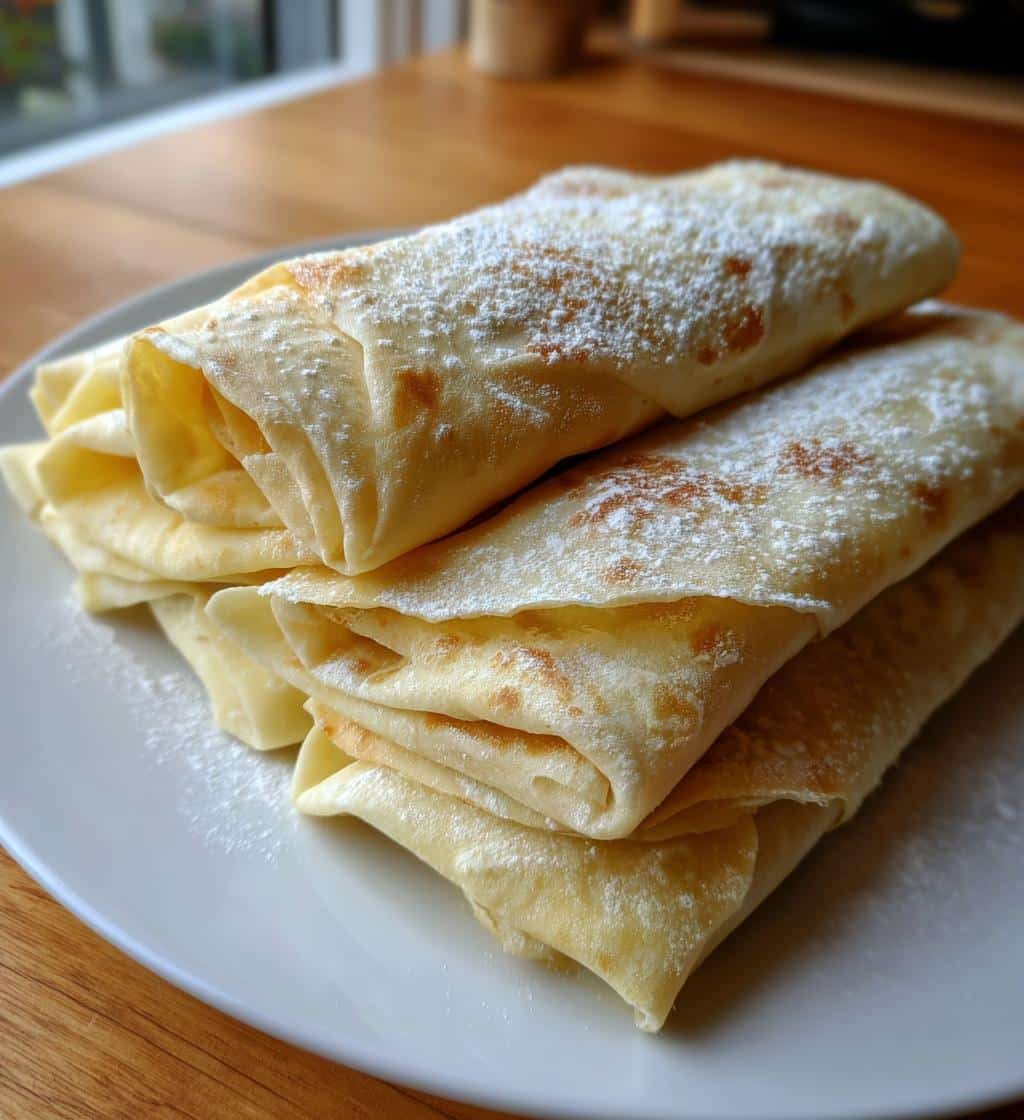
Why You’ll Love This Spring Roll Pastry Recipe
This recipe is my go-to for a reason – it turns basic pantry staples into something magical. Here’s why it’s become my kitchen staple:
- Crispy perfection: Homemade means ultra-thin sheets that fry up with that irresistible shatter-crunch you just can’t get from store-bought.
- Foolproof steps: No fancy techniques – just mix, rest, roll. My first-time students always nail it (even the “I can’t bake” friends!).
- Endless possibilities: Use it for fresh summer rolls, crispy fried versions, or even as a wrapper for dessert fillings – it’s your blank canvas.
- Better than takeout: Seriously, the flavor difference is shocking. Fresh pastry makes your fillings shine instead of fighting a cardboard wrapper.
Ingredients for Spring Roll Pastry Recipe Delicious Homemade Treats
Here’s the beautiful simplicity of this recipe – just four humble ingredients create magic. But listen closely, because each one plays a starring role:
- 2 cups all-purpose flour (sifted) – Not self-rising! That little bit of sifting makes all the difference for smooth rolling later. I use the spoon-and-level method for perfect measurement every time.
- 1/2 teaspoon salt – Just enough to make the flavors pop without tasting salty. Table salt works fine, but if you’re feeling fancy, sea salt adds a nice depth.
- 1 cup water (room temperature) – Cold water makes the dough stubborn, hot water cooks the flour – tepid is your Goldilocks zone here. I test it on my wrist like baby formula!
- 1 tablespoon vegetable oil (neutral flavor) – This is non-negotiable. The oil gives the dough its flexibility and prevents sticking. Canola or grapeseed work great – save the olive oil for dipping sauces.
See? Nothing weird or hard-to-find. Just pantry basics transformed through technique. Now let’s get those hands dusty!
Equipment You’ll Need
Gather these trusty kitchen workhorses before you start – nothing fancy, just the essentials:
- A large mixing bowl (I always grab my wide ceramic one – the extra space makes kneading easier)
- A sturdy rolling pin (mine’s wooden with no handles – perfect for applying even pressure)
- Parchment paper (for separating those delicate sheets)
- An airtight container (for storing leftovers, though good luck having any!)
That’s it! No stand mixer, no pasta roller – just old-school hands-on dough love. Now roll up those sleeves!
How to Make Spring Roll Pastry Recipe Delicious Homemade Treats
Alright, let’s get our hands in that dough! This process is simpler than you think – just follow these steps and you’ll have perfect spring roll pastry ready to wrap up all your favorite fillings.
Step 1: Prepare the Dough
Start by whisking together your sifted flour and salt in that big bowl. Now here’s my trick – pour the water in slowly, stirring with your other hand as you go. You want it to come together like magic, not turn into a sticky mess! The dough should look shaggy at first – that’s perfect. Once most water’s incorporated, drizzle in the oil and start kneading right in the bowl. Five minutes of kneading gives you that smooth, elastic dough that won’t tear when rolling. Too sticky? Dust with just a pinch more flour. Too dry? Wet your hands lightly – don’t add extra water!
Step 2: Rest and Divide
Here’s where patience pays off – cover that beautiful dough ball with a damp towel (I use a clean tea towel) and walk away for 30 minutes. This rest lets the gluten relax so your rolling will be effortless. After resting, divide the dough into golf-ball sized portions – about 20 total. Keep them covered while you work to prevent drying. Pro tip: If your kitchen’s warm, pop the extras in the fridge under that damp towel.
Step 3: Roll and Cut
Now the fun part! Dust your surface lightly and roll each ball out paper-thin – we’re talking about 1mm thickness, where you can almost see through it. No need for perfect circles – squares are easier! Aim for about 6×6 inches, but don’t stress over measurements. As you finish each sheet, layer them between parchment paper to prevent sticking. Need to store them? Just stack with parchment between each, pop in your airtight container, and they’ll keep beautifully for when you’re ready to fill and fry.
Tips for Perfect Spring Roll Pastry Recipe Delicious Homemade Treats
After countless batches (and a few hilarious failures), I’ve learned these golden rules for spring roll pastry success:
- Keep it covered: That dough dries out faster than you’d think! I keep a damp towel over unused portions and work quickly. Dry edges crack when rolling – trust me, I’ve shed tears over torn sheets!
- Roll with purpose: Use firm, even pressure and rotate the dough frequently. My aunt taught me to imagine I’m spreading butter on toast – gentle but confident strokes create the perfect thinness.
- Fresh is best: While you can store the pastry, nothing beats using it right away. The moisture content is perfect for that signature crispiness when fried. Your first bite will prove it’s worth the extra effort!
Storing and Reheating
Okay, confession time – I rarely have leftovers of this pastry because it’s just that good fresh. But when life happens and you need to stash some away, here’s how to keep it perfect:
First, make sure those beautiful sheets are separated by parchment paper – no sticking allowed! Then tuck them into an airtight container. They’ll keep happily in the fridge for about 3 days, though I swear they lose a tiny bit of their magic after day one. For longer storage, freeze them flat (still with parchment between each sheet) for up to a month.
Now, here’s the important part – no reheating! Unlike store-bought wrappers that need thawing, these homemade beauties should go straight from fridge or freezer to filling. The residual moisture helps them seal beautifully when you’re wrapping. Trying to “revive” them with heat just makes them gummy – learned that the hard way during my early kitchen experiments!
One last tip: If you froze them, let the packet sit at room temperature for about 10 minutes before separating – they’re delicate when icy cold. Then fill and fry as usual – you’ll barely notice the difference from fresh!
Nutritional Information
Now, I’m no nutritionist, but after years of making these wrappers (and eating way too many test batches), I’ve got a pretty good handle on what’s in them. Keep in mind these numbers can vary slightly depending on your exact flour brand and how thin you roll them – my sheets always seem to absorb a bit more oil when I’m rushing!
Each delicate pastry sheet comes in at about 45 calories – practically nothing when you consider the crispy joy they bring! You’re looking at roughly 8g carbs and 1g fat per wrapper. The best part? Zero cholesterol and no added sugar – just pure, simple ingredients doing their thing.
Remember, these numbers are for the plain pastry before filling – what you stuff inside is where the real nutritional adventure begins! I always tell my health-conscious friends that homemade means you control exactly what goes in, from lean proteins to piles of fresh veggies. Now pass me that peanut sauce!
FAQs About Spring Roll Pastry Recipe Delicious Homemade Treats
Over the years, I’ve fielded every question imaginable about this recipe – here are the ones that come up constantly in my kitchen (and the honest answers from hard-won experience!):
Can I use gluten-free flour?
Oh honey, I wish! I’ve tried every GF blend out there, and none give that perfect stretch and crisp. Rice flour tears too easily, and almond meal makes greasy wrappers. Stick with regular flour – your spring rolls will thank you.
Can I skip the oil?
Don’t even think about it! That tablespoon of oil is what keeps your dough pliable and prevents sticking. I once tried substituting water – ended up with pastry sheets glued to my countertop. Some kitchen shortcuts just aren’t worth taking!
How thin should the sheets be?
Roll them until they’re practically translucent – like when you can vaguely see the pattern of your rolling pin through the dough. Any thicker and they won’t get that signature shatter-crisp texture when fried. My aunt used to say “thin like a dragonfly’s wing!”
Ready to Try This Recipe?
Alright, my fellow spring roll enthusiasts – it’s your turn to experience the magic of homemade pastry! I can’t wait for you to hear that first glorious crunch when you bite into your creations. Don’t be surprised if your family starts begging you to make these weekly (mine certainly did!).
When you do try it – and I know you will – come back and tell me all about your experience! Did your wrappers turn out paper-thin? Did they fry up with hundreds of delicate bubbles? I want to hear every crispy detail. Leave a comment below or tag me on social media with your spring roll masterpieces – nothing makes me happier than seeing others fall in love with this recipe like I did.
And hey, if you hit any snags along the way, don’t panic! Every torn wrapper is just a lesson learned (I’ve had plenty). Just dust off your rolling pin and try again – I promise the results are worth it. Now go forth and roll!
Print
Crispy Homemade Spring Roll Pastry Recipe in 4 Simple Steps
- Total Time: 50 minutes
- Yield: 20 spring roll sheets 1x
- Diet: Vegetarian
Description
Make delicious homemade spring roll pastry with this simple recipe. Perfect for crispy, golden spring rolls.
Ingredients
- 2 cups all-purpose flour
- 1/2 teaspoon salt
- 1 cup water
- 1 tablespoon vegetable oil
Instructions
- Mix flour and salt in a bowl.
- Add water gradually while stirring to form a smooth dough.
- Knead the dough for 5 minutes until elastic.
- Cover and let rest for 30 minutes.
- Divide dough into small balls and roll each into thin sheets.
- Cut sheets into desired sizes for spring rolls.
- Use immediately or store layered with parchment paper.
Notes
- Keep dough covered to prevent drying.
- Roll sheets as thin as possible for crispiness.
- Store unused pastry in an airtight container.
- Prep Time: 20 minutes
- Cook Time: 0 minutes
- Category: Appetizer
- Method: Handmade
- Cuisine: Asian
Nutrition
- Serving Size: 1 sheet
- Calories: 45
- Sugar: 0g
- Sodium: 50mg
- Fat: 1g
- Saturated Fat: 0g
- Unsaturated Fat: 1g
- Trans Fat: 0g
- Carbohydrates: 8g
- Fiber: 0g
- Protein: 1g
- Cholesterol: 0mg
Keywords: spring roll pastry, homemade, crispy, easy recipe