
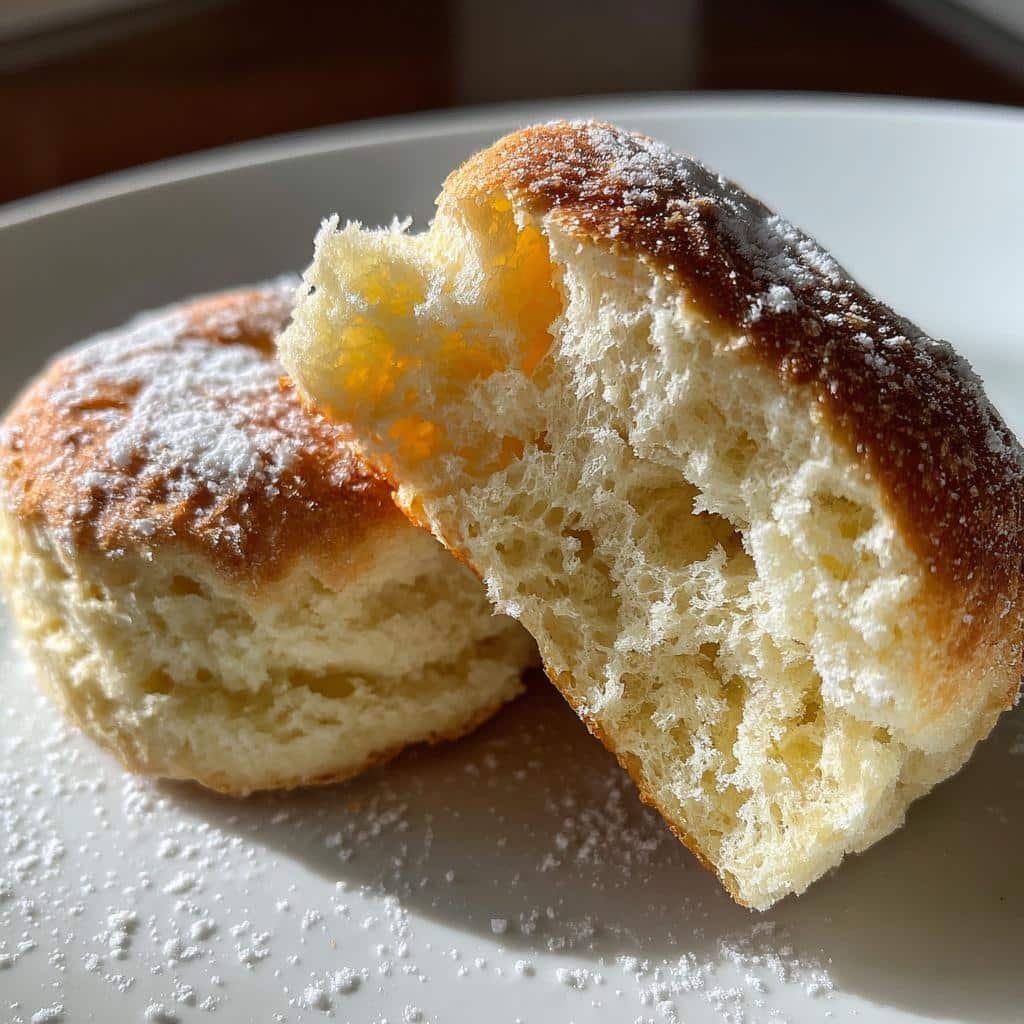
There’s nothing like biting into a warm, homemade English muffin fresh off the griddle – that perfect balance of crisp edges and soft, pillowy centers with all those irresistible nooks and crannies. I still remember my first baking disaster years ago when I attempted English muffins from a fussy cookbook. What a mess! But after dozens of batches (and plenty of mistakes), I’ve perfected this simple, foolproof homemade English muffins recipe that delivers that classic texture every time.
What makes these so special? No preservatives, no mysterious ingredients – just honest-to-goodness flour, milk, and yeast working their magic. That first whiff of toasting muffins in the morning takes me right back to childhood breakfasts at my grandmother’s house. Hers were always split with a fork (never a knife!) to preserve those delicate pockets that hold pools of melting butter. Once you try making them yourself, you’ll never go back to store-bought again.
Why You’ll Love This Homemade English Muffins Recipe
Trust me, once you taste these golden-brown beauties fresh off the griddle, you’ll be hooked. Here’s why this recipe is my go-to:
- No mystery ingredients: Just real, simple pantry staples—none of those unpronounceable preservatives in store-bought versions
- Customizable thickness: Like them thin and crisp or thick and fluffy? Roll the dough to your perfect preference
- Better texture than the grocery store: That signature chewiness and all those butter-trapping nooks? Only homemade delivers this
- Breakfast sandwich magic: Sturdy enough to hold eggs and bacon but tender enough to melt in your mouth
- So satisfying to make: There’s something magical about watching the dough puff up on the griddle—my kids always gather around to watch!
Seriously, that first bite of a warm muffin slathered with butter? Pure happiness on a plate.
Ingredients for Homemade English Muffins
Gathering your ingredients is the first step to muffin magic! Here’s what you’ll need – and yes, these little details matter:
- Dry Team:
- 2 cups all-purpose flour (spooned and leveled, please!)
- 1 tablespoon sugar – just enough to make the yeast happy
- 1 teaspoon salt – don’t skip this flavor booster
- 1 tablespoon active dry yeast (not instant – we want that slow rise)
- Wet Team:
- 1 cup warm milk (110°F – test it on your wrist like baby bottles)
- 2 tablespoons melted unsalted butter (cooled slightly)
- The Finisher:
- Cornmeal for dusting (fine grain works best for that classic crunch)
See? Nothing fancy – just good, honest ingredients that transform into something extraordinary. Pro tip: measure your flour correctly (I learned this the hard way after dense hockey puck muffins!). Spoon it into your measuring cup and level it off – no packing!
Equipment You’ll Need
No fancy gadgets required here—just a few basic kitchen tools that you probably already have:
- A trusty mixing bowl (I use my grandma’s old ceramic one—it just feels right)
- Wooden spoon for stirring (or your clean hands work too—I often go this route!)
- Rolling pin (a wine bottle works in a pinch—been there, done that)
- 3-inch round cutter (or use a clean, empty can if you’re improvising like I sometimes do)
- Griddle or heavy skillet (cast iron gives the best golden crust)
- Spatula for flipping (the thinner the better to get under those delicate muffins)
That’s it! No stand mixer, no special equipment—just good old-fashioned hands-on baking. Though fair warning: you might get flour everywhere like I always do. Totally worth it.
How to Make Homemade English Muffins
Ready to create some homemade magic? Let’s dive into the step-by-step process. I’ll walk you through each stage—from that first sticky dough to golden, griddle-kissed perfection. Follow these simple steps, and you’ll be rewarded with muffins that put the store-bought ones to shame!
Mixing and Kneading the Dough
First, grab your mixing bowl and whisk together the flour, sugar, salt, and yeast. Make a little well in the center—this is where the magic starts! Pour in your warm milk (test it first—too hot and you’ll kill the yeast, too cold and it won’t wake up properly) and the melted butter. Stir with a wooden spoon until it comes together into a shaggy mass.
Now comes the fun part—kneading! Turn it out onto a lightly floured surface (don’t go overboard with the flour—we want soft muffins, not dense ones). Knead for 5-7 minutes until the dough is smooth and elastic. It should feel like a baby’s cheek when you poke it—springy but soft. If it sticks to your hands, just dust them with a tiny bit more flour.
First Rise and Dough Handling
Shape your dough into a ball and place it back in the bowl. Cover it with a damp kitchen towel—this keeps the surface from drying out. Now find a cozy spot for it to rise. I like to use my oven with just the light on—it creates the perfect warm environment.
Let it rise for about 1 hour or until doubled in size. Don’t rush this step—that slow rise develops amazing flavor! You’ll know it’s ready when you poke it gently and the indentation stays.
Shaping and Dusting the Muffins
Punch down the dough (so satisfying!) and turn it out onto a lightly floured surface. Roll it out to about ½-inch thickness—this gives you that perfect balance of crispy edges and soft centers. Use your 3-inch round cutter to cut out muffins (press straight down—no twisting!). Gather the scraps, re-roll, and cut more until all the dough is used.
Sprinkle a baking sheet generously with cornmeal and place your muffin rounds on top. Dust the tops with more cornmeal—this gives that classic English muffin crunch we all love. Let them rest for 10 minutes while you preheat your griddle.
Cook on the Griddle
Heat your griddle or skillet to medium-low—about 325°F if you’re using an electric griddle. No oil needed! Carefully transfer the muffins using a spatula. Cook for 5-7 minutes per side until they’re golden brown and sound hollow when tapped. Don’t rush the heat—low and slow gives you that perfect bake all the way through without burning.
And voilà! You’ve just made bakery-worthy English muffins in your own kitchen. Let them cool slightly before splitting with a fork to reveal all those glorious nooks and crannies.
Tips for Perfect Homemade English Muffins
After burning my fair share of muffins (and serving some suspiciously dense ones to very polite guests), I’ve learned a few tricks that make all the difference:
- Always fork-split: That serrated knife might be tempting, but only a fork gives you those signature nooks that catch all the melty butter and jam
- Mind your heat: If your griddle’s too hot, you’ll get dark outsides and doughy centers – medium-low is the sweet spot
- Give them space: Crowding the pan leads to uneven cooking – I do batches of 4 at a time on my 12-inch skillet
- Patience pays: Resist flipping too early! Wait until you see bubbles forming on top and edges look set
Oh! And one bonus tip – if your muffins puff up like balloons on the griddle (it happens to me at least once per batch), just gently press them down with the spatula. No one will ever know!
Variations and Serving Ideas
One of my favorite things about this homemade English muffins recipe is how easily you can make it your own. Here are some delicious twists I’ve tried over the years—some became instant family favorites!
- Cinnamon-Raisin: Knead in 1 tsp cinnamon and ½ cup plump raisins during the mixing stage—heavenly with cream cheese
- Whole Wheat: Swap half the flour for whole wheat (add an extra tbsp milk)—heartier but still light
- Everything Bagel Style: Press the shaped muffins into a mix of sesame seeds, poppy seeds, and dried onion before cooking
For serving? Oh, the possibilities! My top picks:
- Classic butter and jam (blackberry is my weakness)
- Eggs Benedict—these hold hollandaise like champs
- Breakfast sandwiches with crispy bacon and a drippy fried egg
- Toasted with peanut butter and banana slices—my kids’ after-school staple
Honestly? Sometimes I just eat them warm off the griddle, plain—they’re that good.
Storing and Reheating Your Homemade English Muffins
Fresh English muffins are heavenly, but don’t worry – these store beautifully! For maximum freshness, pop them in an airtight container at room temperature for up to 3 days. My grandma’s trick? Slice them first so they’re ready to toast whenever the craving hits.
For longer storage, freeze them in a zip-top bag for up to a month. No need to thaw – just pop a frozen muffin straight into the toaster (use the “frozen” setting if you have it). That quick blast of heat brings back that fresh-off-the-griddle magic, crisp exterior and all. I always make a double batch just for freezing – morning me is forever grateful!
Homemade English Muffins Recipe FAQs
Over the years, I’ve gotten all sorts of questions about this recipe – here are the ones that pop up most often with my tried-and-true answers:
Can I use instant yeast instead of active dry?
You sure can! Just skip the proofing step and mix it right in with the dry ingredients. The dough will rise faster (about 45 minutes instead of an hour), so keep an eye on it. I prefer active dry for the slower rise and deeper flavor, but when I’m in a pinch, instant works fine. For more on yeast types, check out this guide to yeast.
Why do we use cornmeal?
That gritty texture is classic English muffin magic! The cornmeal creates little pockets of crunch and prevents sticking to the griddle. I use fine-ground for even coverage, but medium works too if you like more texture. (Fun fact: My grandma swore the cornmeal also helped absorb excess moisture for better nooks!)
Can I bake these instead of using a griddle?
Technically yes, but you’ll lose that signature crust. If you must bake, use a baking stone at 375°F for about 15 minutes – they’ll be more bready than traditional. But trust me, the griddle’s worth the extra step for those perfect golden spots! Learn more about baking English muffins.
Help! My dough is too sticky. What now?
Don’t panic! I’ve been there. Just sprinkle a tiny bit of flour on your hands and work surface – a tablespoon at most. Over-flouring makes dense muffins, so resist the urge to go overboard. The dough should be tacky but not stick to everything like glue. If you’re struggling with dough consistency, this article on fixing sticky dough might help.
Nutritional Information
Now, I’m no dietitian, but here’s the general scoop based on my ingredients: Each golden homemade English muffin comes in at about 180 calories, with 4g fat, 30g carbs, and 5g protein. But let’s be real – when they’re this delicious, who’s counting? (Okay fine, maybe I am after eating three in one sitting…). Remember, your exact numbers might vary slightly depending on your specific flour, milk, or how generous you are with that butter topping!
Print
3 Secrets to Perfect Homemade English Muffins Every Time
- Total Time: 1 hour 30 minutes
- Yield: 8 muffins 1x
- Diet: Vegetarian
Description
Make soft and fluffy homemade English muffins with this easy recipe.
Ingredients
- 2 cups all-purpose flour
- 1 tbsp sugar
- 1 tsp salt
- 1 tbsp active dry yeast
- 1 cup warm milk
- 2 tbsp melted butter
- Cornmeal for dusting
Instructions
- Mix flour, sugar, salt, and yeast in a bowl.
- Add warm milk and melted butter, then knead into a dough.
- Let the dough rise for 1 hour.
- Roll out the dough and cut into rounds.
- Dust with cornmeal and cook on a griddle for 5-7 minutes per side.
Notes
- Use a fork to split muffins instead of a knife for better texture.
- Store in an airtight container for up to 3 days.
- Prep Time: 1 hour 15 minutes
- Cook Time: 15 minutes
- Category: Breakfast
- Method: Griddle
- Cuisine: English
Nutrition
- Serving Size: 1 muffin
- Calories: 180
- Sugar: 3g
- Sodium: 250mg
- Fat: 4g
- Saturated Fat: 2g
- Unsaturated Fat: 1g
- Trans Fat: 0g
- Carbohydrates: 30g
- Fiber: 1g
- Protein: 5g
- Cholesterol: 10mg
Keywords: homemade english muffins, easy english muffins, breakfast recipe