
There’s nothing quite like the smell of ginataang kalabasa na may longanisa bubbling away on the stove it instantly takes me back to my lola’s tiny kitchen, where this creamy, savory-sweet dish was our family’s ultimate comfort food. She’d always say, “Ang sarap nito, anak!” as she stirred the pot, and she wasn’t wrong. The way the squash melts into that rich coconut sauce, with those juicy bits of longanisa adding bursts of flavor? Absolute magic. What I love most is how simple it is just a handful of ingredients transforms into something so satisfying. Trust me, one bite and you’ll understand why this dish has been a Filipino favorite for generations.
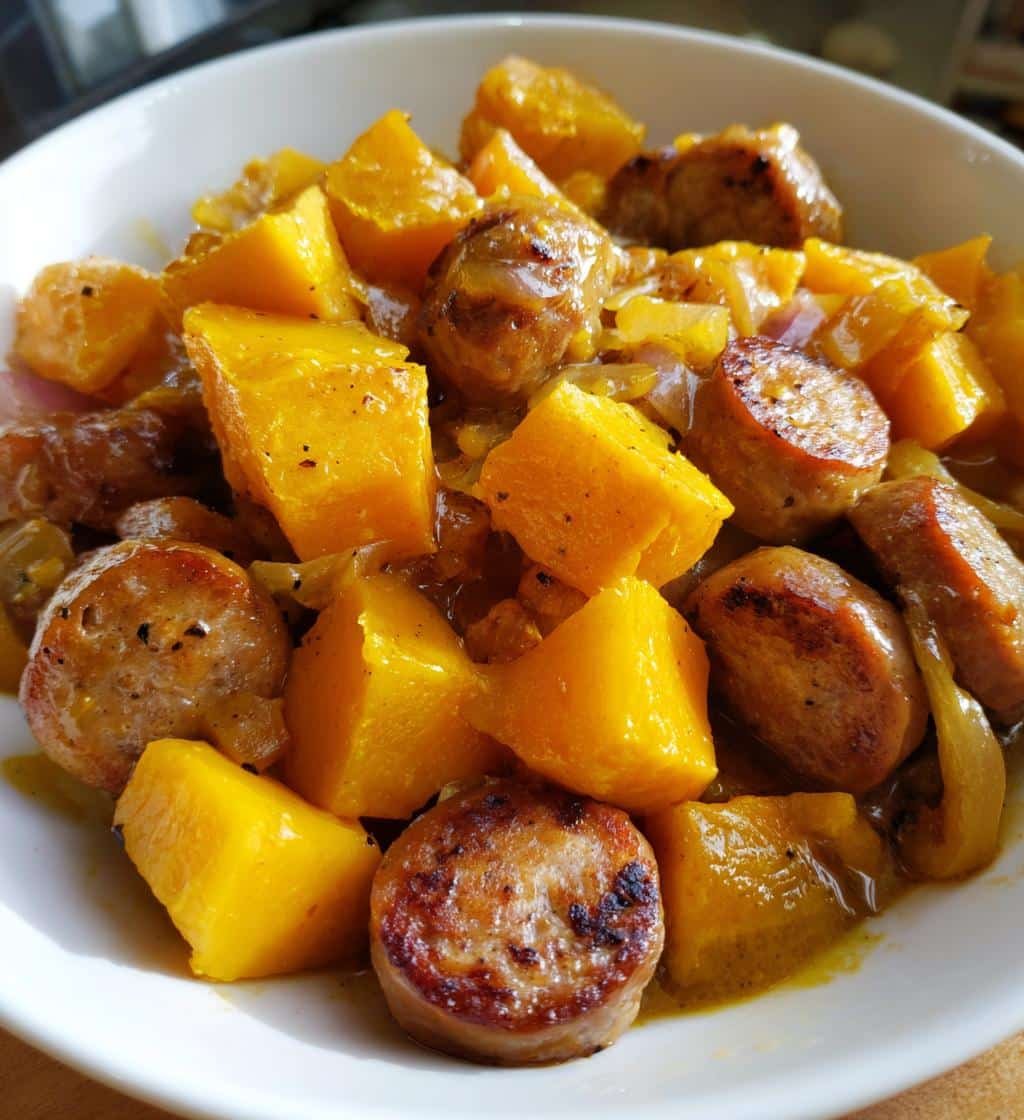
Why You’ll Love This Ginataang Kalabasa na may Longanisa
Oh, where do I even start? This dish is pure comfort in a bowl, and here’s why it’ll become your new favorite:
- Creamy dreamy texture – The coconut milk makes it luxuriously smooth, while the kalabasa melts into the sauce like velvet
- Sweet-savory magic – The natural sweetness of squash plays perfectly with the salty, garlicky punch of longanisa
- Weeknight lifesaver – Ready in under 40 minutes! (Perfect when you’re starving after work)
- Super versatile – Eat it with rice, noodles, or even crusty bread – it’s delicious every way
My kids go crazy for this – it’s that perfect balance of familiar and exciting flavors. And the best part? Leftovers taste even better the next day!
Ingredients for Ginataang Kalabasa na may Longanisa
Okay, let’s talk ingredients – and I mean the real stuff that makes this dish sing. No fancy supermarket runs needed here, just good, honest flavors:
- 1 small kalabasa (squash) – peeled and cubed into bite-sized pieces (about 2 cups) – trust me, fresh is best!
- 200g longanisa – sliced into coins (the garlicky red ones are my favorite, but any Filipino sausage works)
- 1 cup coconut milk – the canned kind is fine, but if you can get fresh, wow!
- 1 cup coconut cream – this is what gives that luscious, thick sauce
- 1 onion – chopped small (I like yellow onions for sweetness)
- 3 cloves garlic – minced fine (don’t skimp – this is flavor central!)
- 1 tbsp fish sauce – our secret umami bomb
- 1 tsp salt – to taste
- 1 tsp ground black pepper – freshly ed if you’ve got it
- 1 tbsp cooking oil – just enough to get things sizzling
See? Nothing complicated – just pantry staples that come together like magic. Pro tip: prep everything before you start cooking. That way, when the garlic hits the oil, you’re ready to roll!
How to Cook Ginataang Kalabasa na may Longanisa
Alright, let’s get cooking! This is where the magic happens – turning those simple ingredients into something spectacular. Don’t worry if you’re new to Filipino cooking; I’ll walk you through each step just like my lola taught me. The key is patience – let each layer of flavor develop properly.
Step 1: Sauté Aromatics and Longanisa
First things first – heat that oil in a large pan over medium heat. You’ll know it’s ready when a tiny piece of garlic sizzles immediately. Now, toss in your minced garlic and chopped onions – that glorious smell hitting your nose means you’re doing it right! Stir constantly for about 30 seconds until they’re fragrant but not browned.
Next comes the star – those sliced longanisa coins. Spread them out in the pan and let them get nice and caramelized for about 2 minutes per side. Oh, that sizzle! The fat rendering out will flavor everything beautifully. Don’t rush this step – those crispy edges make all the difference!
Step 2: Cook Kalabasa and Coconut Milk
Now toss in your cubed kalabasa and give everything a good stir. Let the squash mingle with those delicious pan flavors for about 2 minutes – you’ll see it start to glisten. Here comes the fun part – pour in that coconut milk! It’ll bubble up excitedly at first, then settle into a gentle simmer.
Lower the heat to medium-low, cover, and let it work its magic for about 15 minutes. Peek occasionally and give it a gentle stir – you’re waiting for that moment when the squash is tender enough to pierce easily with a fork but still holds its shape. Warning: resist the urge to stir too much or you’ll end up with mush!
Step 3: Finish with Coconut Cream and Seasoning
Almost there! Now add the coconut cream – this is what gives that luxurious, velvety finish. Stir gently and let it simmer uncovered for about 5 minutes to thicken slightly. Time for seasoning – start with 1 tablespoon fish sauce, then taste. The flavors should be rich and balanced – salty from the longanisa, sweet from the squash, creamy from the coconut.
Here’s my trick: add seasonings gradually, tasting after each addition. Need more salt? Add a pinch. Want more depth? Another splash of fish sauce. Too rich? A squeeze of calamansi or lemon brightens it right up. When it makes you go “Mmm!” without thinking, you’ve nailed it!
Tips for Perfect Ginataang Kalabasa na may Longanisa
After making this dish countless times (and learning from all my mistakes!), here are my absolute must-know tricks for ginataang kalabasa perfection:
- Brown that longanisa like you mean it – Those crispy edges aren’t just pretty, they’re flavor bombs! Take the extra minute to get proper caramelization – it makes all the difference between good and “Oh my god what is this magic?”
- Fresh coconut milk is a game-changer – I know canned is convenient, but if you’ve got a Filipino market nearby, grab fresh. The difference in richness is like night and day. Just watch it doesn’t curdle – keep the heat gentle!
- Cut squash uniformly – Nothing worse than half-mushy, half-crunchy squash! Aim for 1-inch cubes so everything cooks evenly. Pro tip: scrape out those stringy bits thoroughly – they never soften right.
- Taste as you go with fish sauce – That bottle can be sneaky! Start with 1 tbsp, then add by teaspoons until it hits that perfect salty-sweet spot. Remember – you can always add more, but you can’t take it out!
- Want some heat? Toss in a sliced siling labuyo (bird’s eye chili) with the garlic, or sprinkle chili flakes at the end. The coconut milk tames the fire beautifully.
One last secret? Let it sit for 10 minutes off heat before serving – the flavors meld together like old friends catching up. Trust me, it’s worth the wait!
Ingredient Substitutions
Okay, let’s be real – sometimes you’re staring into your fridge thinking “I don’t have that!” No worries! Ginataang kalabasa is super forgiving. Here are my tried-and-true swaps that still deliver amazing flavor:
When you can’t find longanisa
That garlicky Filipino sausage is irreplaceable, but in a pinch:
- Chorizo – Spanish or Mexican works! Just remove the casing and crumble it in. You’ll miss the sweetness but gain smoky depth.
- Italian sausage – Go for the mild kind. Add an extra garlic clove to compensate.
- Bacon or ham – Chop it small! The saltiness works, though you’ll lose that signature bounce.
My lazy college hack? Hotdogs sliced diagonally – not authentic but still tasty in a “3am dorm cooking” way!
Coconut milk alternatives
If coconut’s not your thing or you’re watching calories:
- Light coconut milk – Same flavor, less rich. Stir in 1 tsp cornstarch mixed with water if the sauce seems thin.
- Evaporated milk + butter – Wildcard! Use 3/4 cup evaporated milk + 2 tbsp melted butter. Not traditional but surprisingly good.
- Heavy cream – Only if you’re desperate! Add a pinch of sugar to mimic coconut’s natural sweetness.
Warning: Non-dairy milks (almond, soy) tend to separate – not worth the heartbreak!
No kalabasa? Try these:
While nothing beats our native squash, these work in a bind:
- Sweet potatoes – Cut smaller since they cook faster. Adds earthiness.
- Butternut squash – Almost identical texture! Peel thoroughly.
- Zucchini – Add last minute since it turns to mush fast. Not as sweet.
Whatever you use, remember – the dish will taste different but can still be delicious. Cooking’s all about adapting!
One golden rule: Don’t sub more than 2 main ingredients or you’re basically making a new dish. Ask me how I know (RIP my “ginataang kalabasa” with tofu and almond milk experiment).
Serving Suggestions for Ginataang Kalabasa na may Longanisa
Now comes the best part – eating! This dish is like that friend who gets along with everyone at the party. Here’s how I love to serve it:
- Steamed rice – The classic! That fluffy jasmine rice soaks up the creamy sauce like a dream. My lola would always say “More rice, more happiness!”
- Crispy fried fish – The contrast of crunchy skin with the rich ginataan? Absolute perfection. Tilapia or bangus work great.
- Atchara (pickled papaya) – That tangy crunch cuts through the richness beautifully. My cheat? Store-bought works fine!
- Fried eggplant – Trust me on this! The smoky bitterness balances the sweetness.
- Plain toasted bread – For those “I need comfort NOW” days. Dunking is mandatory!
My personal favorite? Leftovers spooned over garlic fried rice the next morning – breakfast of champions! However you serve it, just make sure you’ve got plenty – this dish disappears fast.
Storing and Reheating
Here’s the thing about ginataang kalabasa – it somehow tastes even better the next day! But you’ve got to store it right to keep that creamy magic alive. My lola taught me these tricks that I swear by:
Fridge storage: Let the dish cool completely (but don’t leave it out more than 2 hours – food safety first!). Transfer to an airtight container and it’ll keep beautifully for 3 days. The flavors actually deepen overnight – that coconut milk works some kind of alchemy!
Freezer friendly: This dish freezes like a dream! Portion it out into freezer bags, squeeze out all the air, and lay them flat. They’ll keep for 1 month – perfect for those “I can’t cook tonight” emergencies. Thaw overnight in the fridge when ready.
Reheating pro tips: Now listen close – coconut milk can be temperamental when reheated! Always use low heat and stir frequently. If it’s looking a bit separated, a splash of warm water or coconut milk helps bring it back together. Microwave works too – just do 30-second bursts and stir between each.
One warning from experience: Never boil reheated ginataan or you’ll end up with grainy sauce. Patience is key! And if you froze it? Reheat straight from frozen on the stove over very low heat – takes about 15 minutes but prevents that watery separation.
Fun fact: My college roommate used to eat it cold straight from the fridge – weird but oddly good? The sauce thickens when chilled into almost a pudding texture. Not traditional, but hey – no judgment here!
Ginataang Kalabasa na may Longanisa FAQs
I get asked about this dish all the time – here are the questions that pop up most often (and my honest answers after years of trial and error!):
Can I use other types of squash?
Absolutely! While kalabasa (Filipino squash) is traditional, butternut squash works beautifully – just peel it thoroughly. Sweet potatoes are my emergency backup (cut smaller since they cook faster). Avoid zucchini unless you’re adding it at the very end – it turns to mush alarmingly fast!
Is this dish supposed to be spicy?
Not traditionally, but oh boy – add some chili if you like heat! I often toss in a sliced siling labuyo (bird’s eye chili) with the garlic for subtle warmth. The coconut milk tames the fire perfectly. For kids or sensitive palates, just leave it out – the dish stands on its own without spice.
Help! My sauce is too thin – how do I thicken it?
First – don’t panic! If you’ve simmered properly and it’s still runny, try these fixes:
- Let it sit uncovered off heat for 10 minutes – often thickens naturally
- Mash a few squash pieces against the pan and stir in
- Mix 1 tsp cornstarch with 1 tbsp cold water, then stir in gently while simmering
Pro tip: Next time, use less coconut milk initially – you can always add more liquid but can’t take it out!
Can I make this vegetarian?
You bet! Skip the longanisa and add extra umami with:
- Fried tofu cubes (pat dry first for crispiness)
- Sliced mushrooms sautéed until golden
- A tablespoon of miso paste whisked into the coconut milk
Just remember – without the sausage, you’ll need to adjust seasoning more aggressively with fish sauce (or soy sauce for vegans).
Why did my coconut milk separate?
Ah, the heartbreak of curdled coconut milk! Usually happens from:
- Boiling too vigorously – keep it at a gentle simmer
- Adding acid (like calamansi) too early
- Reheating on high heat
If it happens, don’t toss it! The flavor’s still good – just whisk vigorously or blend briefly with an immersion blender. It won’t be perfectly smooth but still delicious.
Got more questions? Hit me up – I’ve probably made every mistake possible with this dish so I can save you the trouble!
Nutritional Information
Okay, let’s talk numbers – but remember, these are just ballpark figures because every batch turns out a little different depending on your ingredients! Here’s what you’re looking at per serving (about 1 generous bowl):
- Calories: Around 320 – mostly from that glorious coconut milk
- Fat: 25g (15g saturated) – hey, that’s where the flavor lives!
- Carbs: 18g – with 3g fiber from the squash
- Protein: 10g – thank you, longanisa!
- Sodium: 450mg – adjust with less fish sauce if needed
Important note: These values can swing wildly based on your specific ingredients. Using light coconut milk? Fat drops by half. Extra squash? More fiber. Homemade longanisa? Probably higher fat. Always check your product labels if you’re tracking closely!
My lola would laugh at counting calories – she always said “Good food feeds the soul first!” But I know some folks like to know, so there you go. Just promise me you won’t stress over it – life’s too short not to enjoy good ginataan!
Print
Creamy Ginataang Kalabasa na may Longanisa in Just 40 Minutes
- Total Time: 40 mins
- Yield: 4 servings 1x
- Diet: Low Lactose
Description
Learn how to cook ginataang kalabasa na may longanisa, a Filipino dish combining squash, coconut milk, and sausage for a rich flavor.
Ingredients
- 1 small kalabasa (squash), peeled and cubed
- 200g longanisa (Filipino sausage), sliced
- 1 cup coconut milk
- 1 cup coconut cream
- 1 onion, chopped
- 3 cloves garlic, minced
- 1 tbsp fish sauce
- 1 tsp salt
- 1 tsp ground black pepper
- 1 tbsp cooking oil
Instructions
- Heat oil in a pan and sauté garlic and onion until fragrant.
- Add longanisa and cook until browned.
- Add kalabasa and stir for 2 minutes.
- Pour coconut milk and bring to a boil.
- Lower heat and simmer until kalabasa is tender.
- Add coconut cream and season with fish sauce, salt, and pepper.
- Simmer for another 5 minutes.
- Serve hot.
Notes
- Use fresh coconut milk for best flavor.
- Adjust saltiness by tasting before adding more fish sauce.
- You can add chili for a spicy version.
- Prep Time: 15 mins
- Cook Time: 25 mins
- Category: Main Dish
- Method: Stovetop
- Cuisine: Filipino
Nutrition
- Serving Size: 1 bowl
- Calories: 320
- Sugar: 5g
- Sodium: 450mg
- Fat: 25g
- Saturated Fat: 15g
- Unsaturated Fat: 8g
- Trans Fat: 0g
- Carbohydrates: 18g
- Fiber: 3g
- Protein: 10g
- Cholesterol: 30mg
Keywords: ginataang kalabasa, longanisa, Filipino recipe, coconut milk squash