
Oh, May what a glorious time for fresh flavors! I’m practically giddy when I see the farmers’ markets bursting with color this time of year. That’s why I swear by my May seasonal produce chart it’s like having a cheat sheet for nature’s bounty. Trust me, cooking with what’s in season means your meals taste better, cost less, and support local growers. Just peek at the chart, grab what’s freshest, and boom you’re halfway to an amazing meal. Strawberries at their juiciest, asparagus so tender it practically cooks itself… Can you tell I’m obsessed? Let’s dive in!
May Seasonal Produce Chart
Let me tell you why this chart is my kitchen bible every May! It’s not just a list it’s your ticket to the freshest, most flavorful meals without any guesswork. I’ve been using seasonal charts for years, and honestly, they’ve completely changed how I cook. No more staring blankly at the grocery store wondering what’s actually good right now.
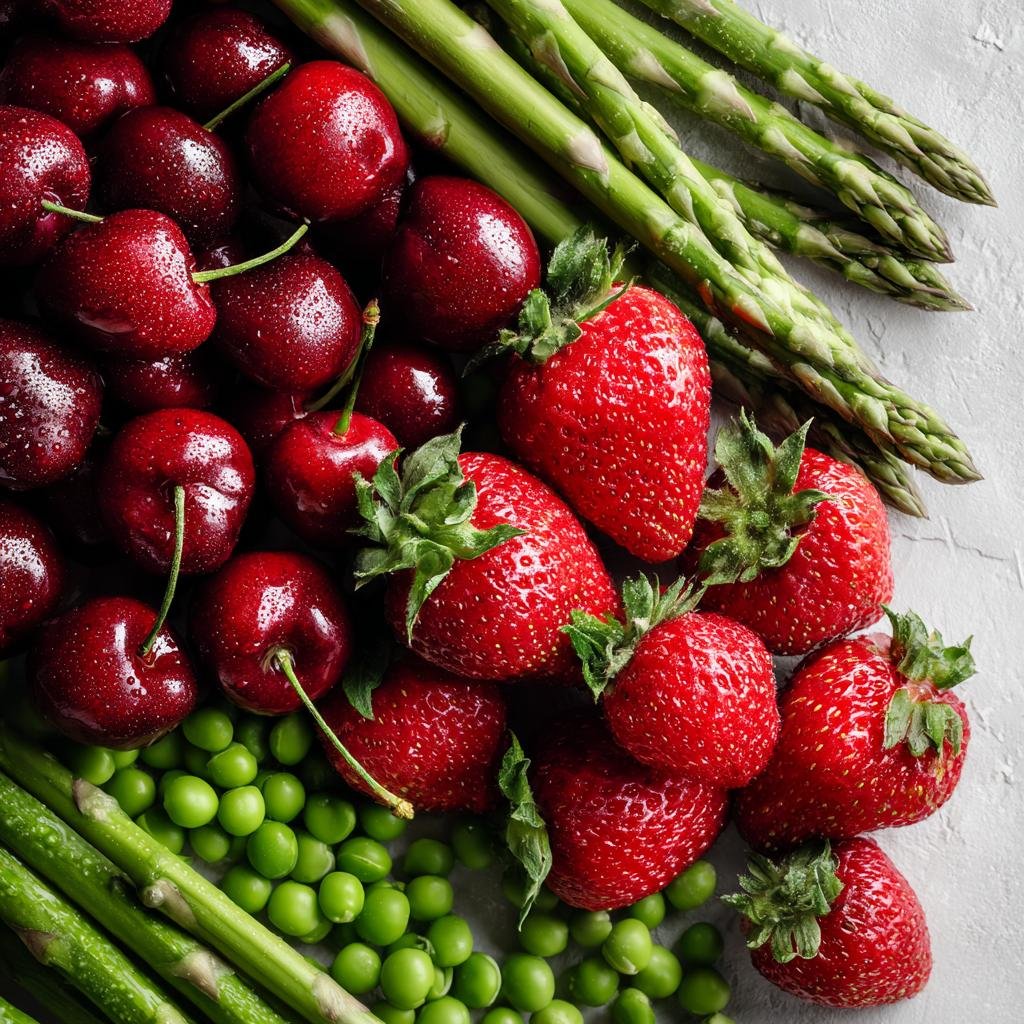
The magic happens when you see everything laid out so clearly. Strawberries? Check. Asparagus? You bet. Those sweet little peas that taste like spring? Absolutely. Suddenly meal planning becomes this joyful puzzle where all the pieces fit perfectly. I keep mine pinned to the fridge so I can glance at it while making my shopping list.
What I love most is how it takes the stress out of cooking. When you start with ingredients at their peak, you barely need to do anything fancy to make them shine. A simple sauté, maybe a quick roast, and dinner tastes like you spent hours when really, May’s bounty did all the heavy lifting!
Key Ingredients in May Seasonal Produce Chart
Oh, let me gush about May’s star players! This is when nature really shows off with flavors so vibrant they’ll make your taste buds dance. First up – fruits that taste like sunshine: strawberries so red they stain your fingers, plump cherries that burst with juice, and apricots with that perfect balance of tart and sweet. I wait all year for these!
Then come the veggies – oh my goodness, the veggies! Asparagus so tender it practically melts, sugar snap peas that crunch like they’re fresh from the vine, and spinach so green it looks photoshopped. Don’t even get me started on the herbs – fragrant mint that perfumes your whole kitchen, basil so fresh it tastes like summer, and chives that add that perfect oniony punch.
Here’s my pro tip: these ingredients don’t need much fussing. When they’re this fresh and seasonal, a drizzle of good olive oil and a pinch of salt is often all you need. May’s bounty is nature’s way of making us look like kitchen rockstars! If you’re looking for ways to use that fresh basil, check out this grilled caprese stuffed chicken recipe.
How to Use the May Seasonal Produce Chart
Okay, let me walk you through how I use my May chart – it’s easier than you think! I swear, once you get the hang of it, you’ll wonder how you ever shopped without one. The best part? No fancy skills required, just a little organization and excitement for fresh flavors.
Step 1: Check the Chart
First thing I do every Sunday morning – coffee in one hand, chart in the other. I scan for what’s highlighted as “peak season” in May. Remember, availability can vary by region (my cousin in Maine gets strawberries later than I do in Virginia), so adjust based on what’s actually appearing at your local market. If you see it everywhere and it smells amazing? That’s nature telling you it’s time!
Step 2: Plan Your Meals
Here’s where the fun begins! I let the chart inspire me – maybe strawberries mean it’s time for that spinach-strawberry salad I adore. Asparagus? Hello, quick pasta with lemon and parmesan! The key is keeping it flexible – if peas look better than beans this week, I’ll swap them in my stir-fry. Some weeks I’ll pick 3-4 star ingredients and build meals around them.
Step 3: Store Produce Properly
Listen, nothing hurts more than watching perfect produce go bad! Here are my can’t-live-without tips: keep herbs stems-down in water like flowers, wrap asparagus in a damp towel, and never wash berries until you’re ready to eat them. Oh, and those tender greens? They go straight into my salad spinner lined with paper towels – stays crisp for days! Learning proper storage techniques can really help maximize the shelf life of your fresh finds, which is something many food safety organizations emphasize.
Benefits of Using the May Seasonal Produce Chart
Let me count the ways this chart makes life better! Honestly, I didn’t realize how much I was missing out on until I started using seasonal produce guides religiously. Here’s why you’ll fall in love with it too:
- Your wallet will thank you – When produce is in season, there’s more of it, which means lower prices. I’ve cut my grocery bill by nearly 30% just by shopping what’s abundant!
- Flavor that’ll knock your socks off – Strawberries picked at peak ripeness taste like candy compared to those sad winter imports. Seasonal means optimal growing conditions = maximum deliciousness.
- It’s easier than you think – No more guessing games at the store. The chart does the work for you – just pick what’s listed and you’re guaranteed good stuff.
- You’ll eat healthier without trying – Seasonal produce packs more nutrients since it’s harvested at its prime. Bonus: it’s so tasty you’ll naturally want more veggies!
- Feel-good sustainability – Buying seasonal means less transportation, storage, and artificial ripening. Your carbon footprint shrinks with every bite.
Seriously, once you taste the difference, you’ll never go back to out-of-season produce again. It’s like discovering your favorite band’s best album – you wonder how you ever settled for less!
Ingredient Substitutions and Tips
Okay, let’s talk real life – sometimes the exact ingredient on the chart isn’t available, and that’s totally fine! Here’s how I roll with the punches when May’s bounty needs a little improvising:
Can’t find fresh cherries? Frozen ones work shockingly well for baking – just pat them dry before using. No sugar snap peas? Try green beans – they’ve got that same satisfying crunch. And if asparagus prices are wild this week, broccolini makes a fantastic stand-in for most recipes. If you are looking for a great way to use those fresh herbs, consider making some easy ranch oyster crackers as a snack!
Now for my foolproof tips for picking winners: smell everything! Ripe strawberries should perfume the air around them. Look for asparagus with tight, firm tips – limp ones are past their prime. With herbs, avoid any with black spots or that look wilted. And here’s my favorite trick – gently squeeze apricots; they should give just slightly, like a ripe peach.
Remember, seasonal eating is supposed to be fun, not stressful. If something’s not available, just swap in what looks best that day – that’s how all the best kitchen discoveries happen!
FAQ About May Seasonal Produce
I get asked about May produce all the time – let’s tackle those burning questions! “How do I know what’s really in season?” Trust your nose and the crowds at the farmers’ market – if everyone’s buying it and the aroma makes you swoon, that’s nature’s green light.
“Can I freeze May fruits for later?” Absolutely! I freeze strawberries on sheet pans before bagging them – perfect for smoothies when summer’s over. “What if my store doesn’t carry everything on the chart?” No stress – focus on what they do have that’s fresh and local. My rule? If it wasn’t grown within a few hundred miles this month, it can probably wait. For more general information on food seasonality, you can check out resources dedicated to US agricultural guidelines.
“How long will May produce last?” Here’s my cheat sheet: berries 3-5 days (if you can resist eating them!), asparagus about a week in the fridge’s crisper, and herbs up to 10 days in water. Just remember – seasonal eating is about flexibility and fun, not perfection!
Nutritional Information
Just a quick heads up – the nutritional goodness from May’s seasonal produce can vary depending on exactly what you pick and how fresh it is. Think of this chart as your flavor compass rather than a nutrition label. Those vibrant colors? They’re nature’s way of saying “packed with vitamins!” But really, when produce is this fresh and seasonal, you’re already winning in the health department without needing to count a thing.
Share Your Experience
Now it’s your turn! Try the May seasonal produce chart and see how it transforms your cooking. I’d love to hear what delicious creations you whip up – tag me with your strawberry salads, asparagus pastas, or any other May-inspired dishes. Trust me, once you taste the difference seasonal makes, you’ll be hooked just like I was!
Print
May Seasonal Produce Chart: 10 Fresh Picks That Taste Incredible
- Total Time: 5 minutes
- Yield: 1 chart
- Diet: Vegetarian
Description
A chart showing seasonal produce for the month of May to help you plan meals with fresh ingredients.
Ingredients
- Seasonal fruits (e.g., strawberries, cherries, apricots)
- Seasonal vegetables (e.g., asparagus, peas, spinach)
- Herbs (e.g., mint, basil, chives)
Instructions
- Check the May seasonal produce chart.
- Select fresh fruits and vegetables available in your region.
- Plan meals based on the seasonal ingredients.
- Purchase or harvest the produce.
- Store properly to maintain freshness.
Notes
- Availability may vary by region.
- Opt for organic or locally grown produce when possible.
- Use the chart to reduce food waste and save money.
- Prep Time: 5 minutes
- Cook Time: 0 minutes
- Category: Seasonal Guide
- Method: Reference
- Cuisine: Global
Nutrition
- Serving Size: 1 chart
- Calories: 0
- Sugar: 0g
- Sodium: 0mg
- Fat: 0g
- Saturated Fat: 0g
- Unsaturated Fat: 0g
- Trans Fat: 0g
- Carbohydrates: 0g
- Fiber: 0g
- Protein: 0g
- Cholesterol: 0mg
Keywords: seasonal produce, May fruits, May vegetables, fresh ingredients, meal planning